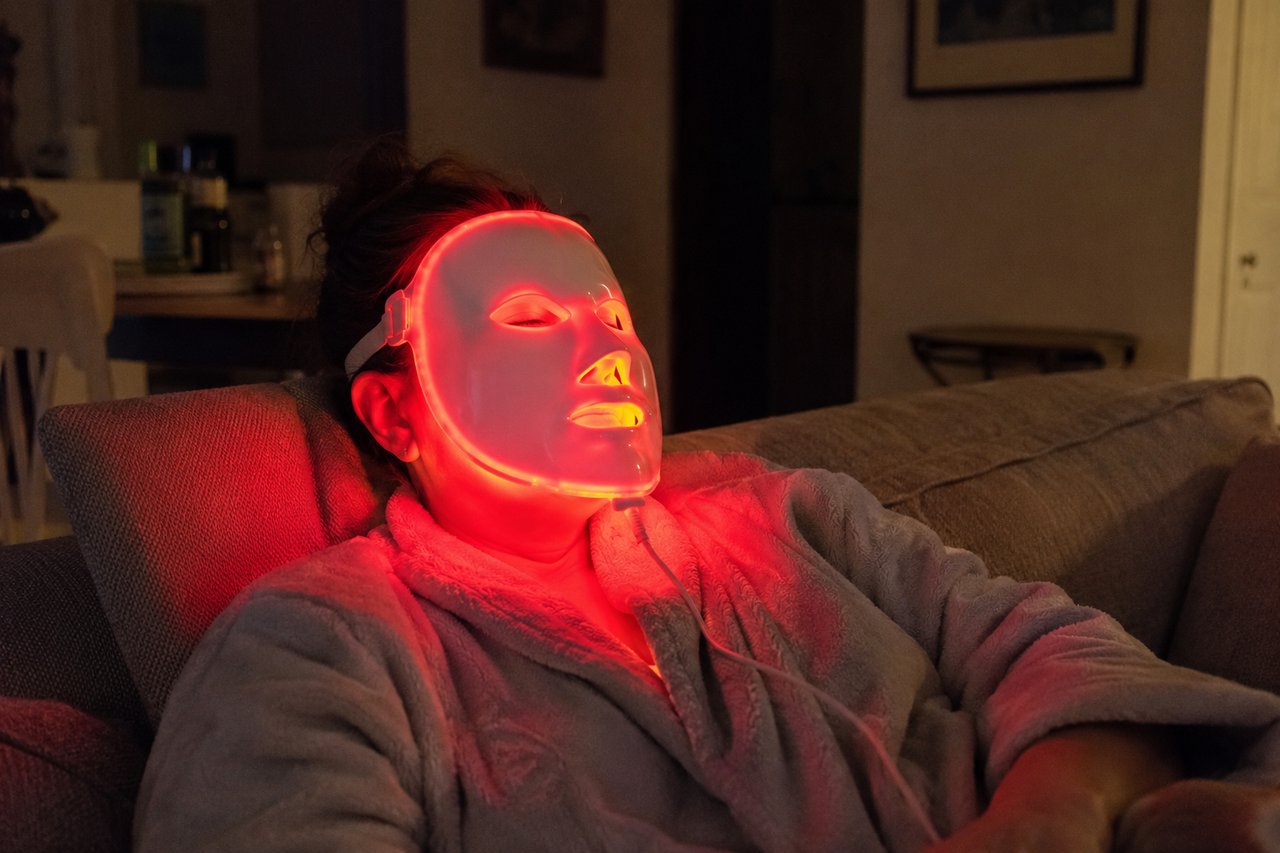
Do LED face masks actually work, and which ones are worth it?
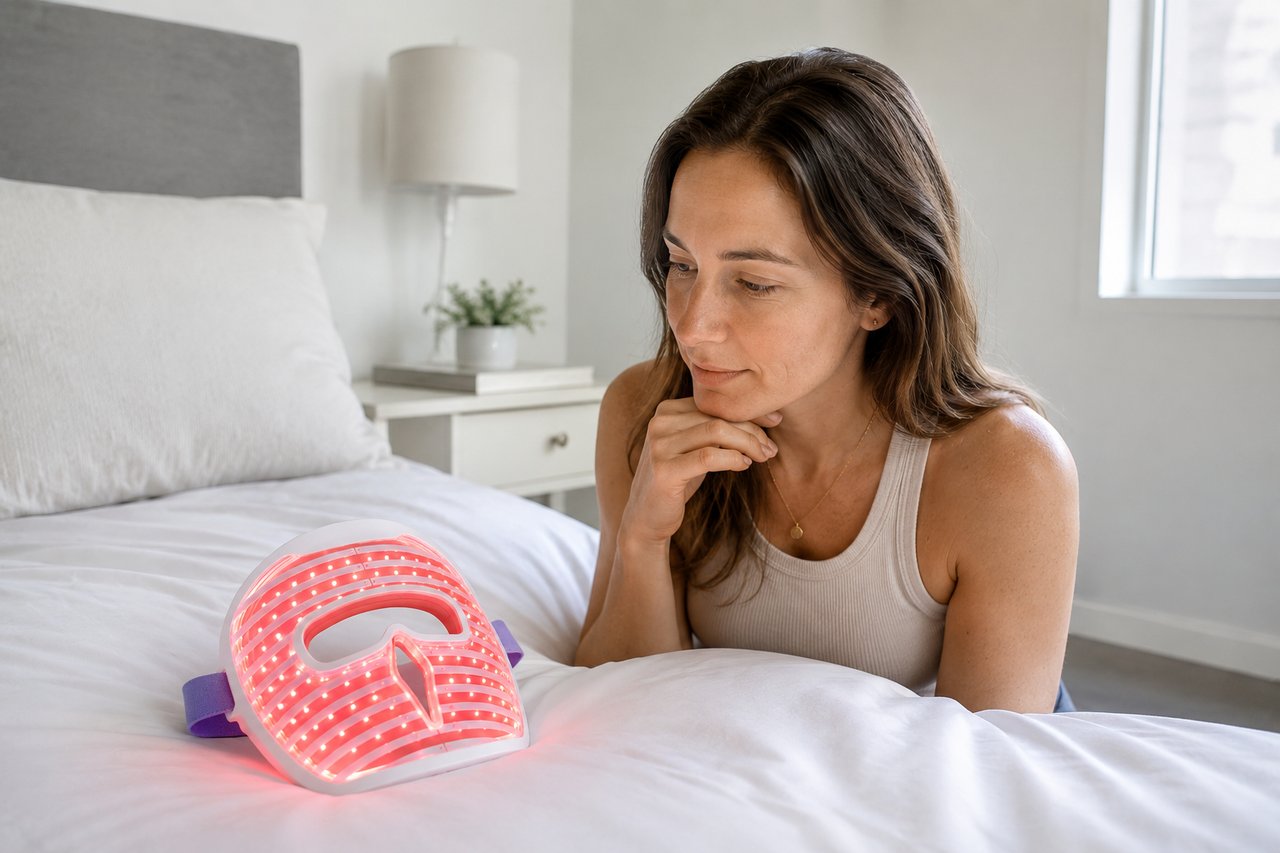
LED face masks are everywhere now, glowing red across your feed and ranging from forty dollars to over six hundred. The strange part is that the science behind them is genuinely real, and yet most of the masks being sold barely do anything. Both things are true at once. We read the peer reviewed research, checked what the FDA actually clears these devices for, and looked at independent testing, to answer the only two questions that matter. Do they work, and how do you tell a real one from an expensive light up toy.
First, do they actually work?
Yes, and this part is not hype. Red light at around 630nm and near infrared light at around 830nm have solid peer reviewed evidence for stimulating collagen and softening fine lines, and blue light at around 415nm helps with acne causing bacteria. The mechanism is real too. The light is absorbed by your cells and nudges the mitochondria to make more energy, which is the process researchers call photobiomodulation. There are even controlled clinical trials where a home used LED mask measurably improved crow's feet over several weeks.
So the honest headline is that LED therapy works. But notice the conditions hiding in that sentence. The right wavelengths, enough light actually reaching the skin, and consistent use over weeks. Miss any of those and you get a gadget that does nothing. That is where most of the market falls apart.
Why most masks still disappoint
Three things decide whether a mask does anything at all. The wavelengths have to be right. The irradiance, meaning the strength of light that actually lands on your skin, has to be high enough to matter. And the dose has to add up over consistent sessions. A mask can nail the first and completely fail the second, and you would never know from the marketing.
Here is the part almost nobody mentions. When a mask says FDA cleared, that is a safety statement, not a results statement. The FDA clears most of these devices for being safe and similar to products already on the market, not for being proven to work. The badge means it is unlikely to hurt you. It does not mean it will do anything for your skin. A peer reviewed review of the field went further and found that manufacturer dosing instructions are often inconsistent with the dose actually delivered, because they ignore how light scatters and weakens as it travels.
The number on the box is not what reaches your skin
This is the heart of it. Brands love to print a huge energy figure on the box, but that number is usually measured right at the surface of the LED, or it is the total output of every LED added together. Your face sits a few centimeters away from those lights, and light falls off quickly with distance. So the dose that actually reaches your skin is a small fraction of the advertised one.
A concrete example makes it obvious. The popular Shark CryoGlow advertises a figure of up to 431 joules per square centimeter. An LED engineer who tests these devices with a calibrated instrument, and who in fairness designs competing masks for a rival brand, measured the Shark at a realistic wearing distance and found the dose actually delivered was closer to 1.44 joules per square centimeter per session. A simple physics check supports the gap, because delivering 431 joules per square centimeter in one sitting would take hours, not minutes. The big number is the combined output of all the LEDs, not what lands on each patch of your face. To be clear, this is not a Shark problem. It is how the whole category markets itself.
How to tell a real mask from a light up toy
- It publishes its wavelengths, and they include red around 630nm and near infrared around 830nm, plus blue around 415nm if you want help with acne.
- It tells you the irradiance at the skin, not just a giant combined number. Clinical research tends to use roughly 25 to 50 milliwatts per square centimeter. Many cheap masks hide this figure entirely, which tells you everything.
- It has FDA clearance as a floor, and better still, real published testing on that exact device, not just on red light in general.
- It covers the whole face with enough evenly spaced LEDs, so the light is consistent rather than patchy.
- If a mask will not tell you its wavelengths and power, that silence is your answer.
Set your expectations honestly
Even a genuinely good mask is a slow, supporting player, not a miracle. Results build over weeks of near daily use, and they are gentler than what a dermatologist can do in office. A mask will not replace the things that move the needle most, a daily sunscreen and, if your skin tolerates it, a retinoid. If anything, it works best layered on top of those basics. We cover the workhorses in our EltaMD UV Clear review and retinol without the peeling.
LED works. The spec is everything. The box usually oversells.
If you want a mask that actually clears the bar, we did the homework and tested the leading options against their real specs and real customer reviews, rather than ranking whoever pays the most.
See our tested red light mask picks →The bottom line
LED face masks are one of the rare beauty gadgets with real science behind them, which is exactly why the market is flooded with weak imitations riding on that credibility. The technology is not the question. The specific device is. Buy one that publishes honest wavelengths and power, has testing behind it, and that you will actually use a few times a week, and you can expect a slow, real improvement. Buy on a glowing photo and a giant number on the box, and you are most likely buying a light up toy.
This article is general education and our editorial opinion, not medical advice. See a dermatologist for persistent skin concerns, and stop any device that causes irritation.
Frequently asked questions
Do LED face masks really work?
Yes, within limits. Red and near infrared light have peer reviewed evidence for collagen and fine lines, blue light helps acne, and controlled trials show real improvement from home masks. But results are milder than in office, build over weeks, and only happen if the mask delivers enough of the right light to your skin.
Does FDA cleared mean it works?
No. Most LED masks are FDA cleared for safety and similarity to existing devices, not for proven results. The clearance means it is unlikely to harm you, not that it is guaranteed to do anything. Proof comes from published testing on that specific device.
What wavelengths should it have?
For anti aging, red around 630nm and near infrared around 830nm. For acne, blue around 415nm. If a mask does not publish its wavelengths, treat that as a red flag.
Why is the number on the box so high?
Brands often quote the total output of every LED added together, or the power at the LED surface. Your skin sits centimeters away and light weakens fast with distance, so the dose that reaches your face is a fraction of the headline figure.
Are cheap LED masks a waste of money?
Often, yes. A mask that hides its wavelengths and power, or runs too weak to clear the threshold that does anything, will not deliver no matter how good the reviews look. The ones worth buying publish real specs and have testing behind them.
Sources & further reading
- "Methodological issues in visible LED therapy dermatological research and reporting", peer reviewed
- "Is red light therapy right for your skin?", American Academy of Dermatology
- "Home used LED and infrared mask for crow's feet, a randomized controlled study", peer reviewed
- "Review of light parameters and photobiomodulation efficacy", peer reviewed