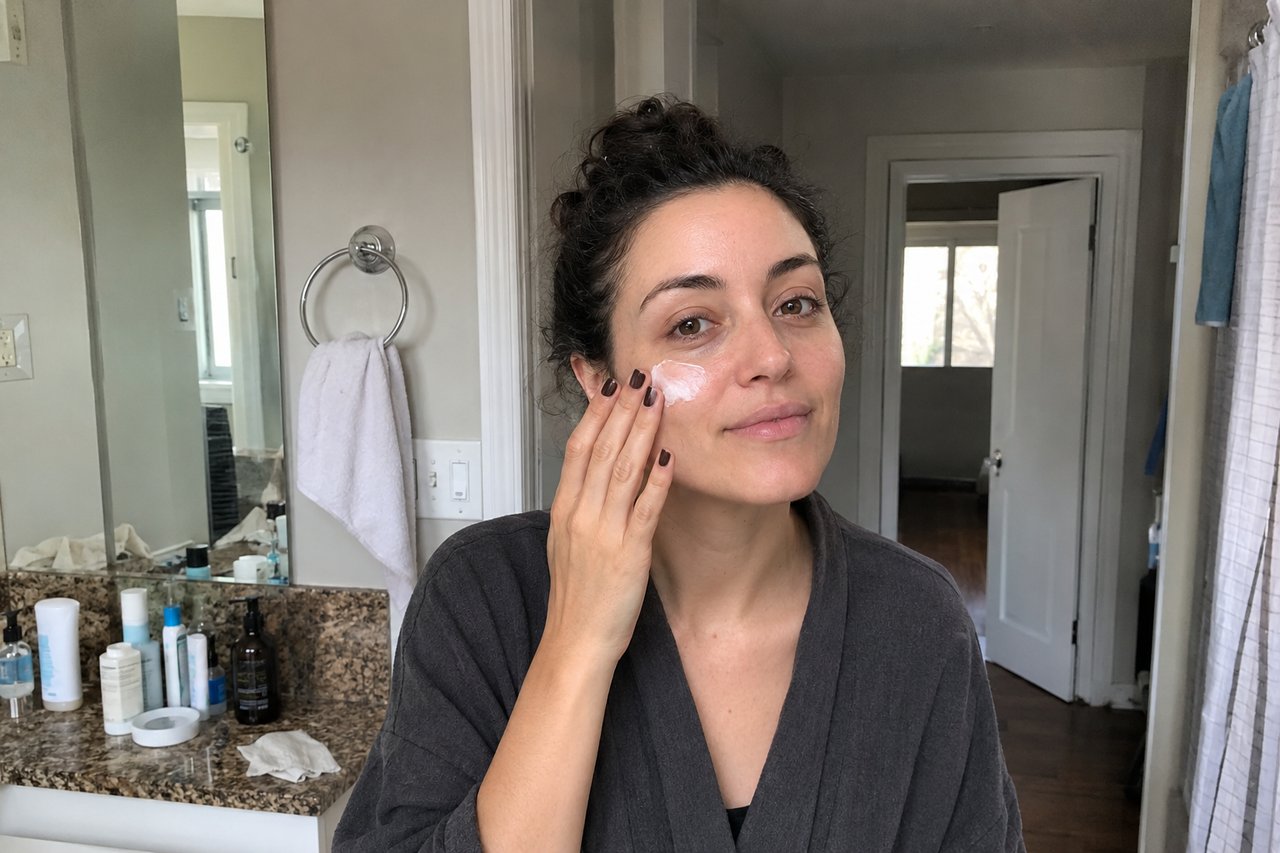
Niacinamide, what it actually does

Niacinamide is in half the serums on the shelf, and it gets credit for almost everything. The good news. It's one of the most studied, best tolerated ingredients in skincare, and it genuinely earns most of the hype. Here's what it does, who it's for, and how to use it.
What it is
Niacinamide is a form of vitamin B3. It's water soluble, sits comfortably in serums and moisturizers, and works across nearly every skin type, oily, dry, sensitive, and combination alike. Unlike many actives, it rarely stings and doesn't make skin more sensitive to the sun, which is part of why dermatologists reach for it so often.
What it does (the evidence)
Niacinamide isn't a one trick ingredient, and that's exactly why it's everywhere. The research points to four real effects.
- Strengthens the skin barrier. It boosts your skin's own production of ceramides and other barrier lipids (it ramps up the rate limiting enzyme in that process), which lowers water loss and helps with dehydrated and dry skin.
- Calms redness and inflammation. Its anti inflammatory action makes it a favorite for reactive, easily flushed skin and for settling breakouts.
- Helps regulate oil. It supports more balanced sebum, which is why it shows up in so many products aimed at oily and congested skin.
- Evens tone and fades dark spots. It interrupts the transfer of pigment to surface skin cells, and studies on around 5% niacinamide show measurable brightening of uneven tone over time.
It's also a mild antioxidant, helping skin hold up against day to day environmental stress.
A do a little of everything ingredient. Barrier support, less redness, more balanced oil, and brighter tone, with very little risk of irritation.
Who it's for
Almost everyone, which is rare for an active. It's especially worth having if your skin is oily or congested, prone to redness, dehydrated, or showing uneven tone and dark spots. If you took our skin quiz, niacinamide fits comfortably into most of the five skin type routines.
How to use it
- Strength. 2–5% does the job for most people. Around 2% leans toward oil and barrier support. About 5% is the range studied for tone and dark spots. Very high percentages (10%+) add little and can irritate some skin.
- When. morning or night, typically after cleansing and before your moisturizer.
- Pairs with. nearly everything, including retinol and exfoliating acids (it can even buffer their sting). Just don't pile on every active at once, see our note on not over doing it.
The best niacinamide serum to start with
If you just want one to buy, the most recommended niacinamide serum is also one of the cheapest.
The Ordinary Niacinamide 10% + Zinc 1%
The default for a reason. It is inexpensive, and owners credit it with less oil, clearer skin, and smaller looking pores with regular use. One note, it is 10%, a little above the 2 to 5% the studies use, so it is plenty strong. Most skin handles it fine, but if you are sensitive, start a couple of times a week or look for a lower percentage.
Loved
- Less oil and clearer looking skin
- Smaller looking pores with use
- Unbeatable price
Gripes
- 10% can be strong for sensitive skin
- Can pill if over applied
The myths
You may have heard niacinamide "cancels out" vitamin C. That's an old claim based on lab conditions that don't reflect modern, stable formulas. In practice they're fine together. And as with any active, more isn't better. A sky high percentage won't speed up results, but it can trigger flushing or irritation in sensitive skin.
How long until it works
Barrier comfort and oil balance often improve within two to four weeks. Tone and dark spot changes are slower, give it eight to twelve weeks of consistent use before judging. Like most of skincare, it rewards patience over intensity.
What to look for in a product
- 2–5% niacinamide on the label, paired thoughtfully. With zinc for oil control, with hyaluronic acid or ceramides for barrier support, or with vitamin C for brightening.
- A lightweight serum or moisturizer texture, it absorbs fast and layers under anything.
- You don't need a "10% max strength" version, the research sweet spot is lower, and higher percentages mainly raise the odds of flushing.
Common mistakes
- Stacking it with five other actives at once. Niacinamide is gentle, but a pile on of acids and retinoids on top still overwhelms skin. Add one new thing at a time.
- Expecting overnight brightening. Tone and dark spot changes take eight to twelve weeks. Quitting at week three is the most common reason people think it "did nothing."
- Reaching for the highest percentage. More isn't stronger results, just more flushing risk on reactive skin.
- Skipping moisturizer. Niacinamide supports your barrier, but it isn't a moisturizer on its own.
Niacinamide for specific concerns
- Oily, breakout prone skin. by supporting more balanced sebum and calming inflammation, it can make skin look less greasy through the day and help angry spots settle, without the dryness that harsher acne actives bring.
- Redness and reactive skin. its anti inflammatory action is why it's a staple in products aimed at flushing and sensitivity. It tends to be one of the few actives easily irritated skin tolerates.
- Enlarged looking pores. it won't shrink a pore permanently (nothing topical does), but by keeping oil and debris in check, pores can look tighter and less obvious over time.
- Post blemish marks. the brown or red marks left after a spot heals often fade faster with consistent niacinamide, thanks to that same pigment transfer effect.
- Early signs of aging. as a mild antioxidant and barrier booster, it's a low drama way to support skin that isn't ready for (or can't tolerate) retinol.
Niacinamide vs other brighteners
If your main goal is a more even tone, niacinamide is the gentle, get along option, but it's not the only one, and they're often used together.
- Vitamin C. a stronger antioxidant and brightener, best in the morning under sunscreen, but more prone to irritation and instability. Niacinamide is the easier daily companion.
- Azelaic acid. excellent for redness, marks, and breakouts at once. A step up in targeted power, still relatively gentle.
- Alpha arbutin. a focused spot fader that pairs neatly with niacinamide for stubborn discoloration.
The takeaway. Niacinamide is rarely the strongest choice for any one concern, but it's the most universally useful and the least likely to cause trouble, which is exactly why it belongs in so many routines.
How to slot it into your routine
After cleansing, apply niacinamide before your moisturizer. It layers happily morning or night. A common, effective setup. Niacinamide plus vitamin C and sunscreen in the AM, niacinamide alongside (or buffering) retinol in the PM. Because it's so well tolerated, it's also a good "first active" if you're easing into a real routine.
Realistic results by concern
Oil control and barrier comfort tend to show first, often within two to four weeks. Redness eases over a similar window. Tone, marks, and pore appearance are the slow ones, plan on eight to twelve weeks of steady use, ideally photographed at the start so you can see the change rather than rely on memory.
Why it's so easy on skin
Most actives earn their results by pushing your skin, exfoliating it, forcing turnover, irritating it into responding. Niacinamide is different. It's a precursor to coenzymes your cells use for energy and repair, so instead of stressing the skin, it works with normal biology. Supporting the enzymes that build barrier lipids, feeding antioxidant defenses, and gently regulating pigment. That cooperative mechanism is why it so rarely stings, why it layers with almost anything, and why it's one of the few ingredients dermatologists hand to sensitive skin and total beginners without much worry. It's less a hammer than a quiet support system.
The bottom line
Niacinamide won't be the single most powerful answer to any one concern, there's almost always a stronger specialist for oil, or pigment, or aging. But it's the most versatile and best tolerated active in skincare, and a near foolproof addition to nearly any routine. Pick a 2–5% formula, give it a genuine eight to twelve weeks, and let it do steady, cumulative work in the background while your "hero" actives do the heavy lifting. Few ingredients give you this much, this reliably, for so little risk.
About those "niacinamide + everything" serums
Walk the aisle and you'll find niacinamide bundled with peptides, postbiotics, zinc, hyaluronic acid, and a paragraph of buzzwords. Those combinations are pleasant, and some add genuine value, but the niacinamide is the proven workhorse doing most of the documented work. You don't need the longest ingredient list or the priciest "complex" to get the benefits. A simple, well formulated 2–5% niacinamide does the job. Read the extras as nice to haves, not the reason to buy, and don't pay a premium for a label that's mostly marketing. Effective skincare is usually shorter and quieter than the packaging suggests.
This article is general education, not medical advice. Patch test new products and see a dermatologist for persistent or severe skin concerns.