Jojoba oil is not an oil, and that is why your skin thinks it belongs there
Every shelf in America files jojoba next to coconut oil and olive oil, and every shelf in America is wrong. Chemically, jojoba is not an oil at all. It is a liquid wax ester, a structure so close to the sebum your own skin produces that your face treats it less like a guest and more like itself. That one fact explains almost everything people love about it, why it absorbs when other oils sit there, why oily skin tolerates it, why it almost never clogs pores. It also explains the one thing jojoba cannot do, which the marketing never mentions and which we will get to, because it matters. The people who figured all this out first were not chemists. They were the O'odham of the Sonoran Desert, centuries ago. We read the research and the real reviews. Here is the whole story.
The desert already knew
Jojoba is a scrubby, drought proof shrub that grows in the Sonoran Desert across Arizona, California, and northern Mexico, and the people who lived with it understood its seed long before anyone put it in a bottle. The Tohono O'odham and neighboring desert peoples heated and ground jojoba seed into a buttery paste and used it to condition skin and hair, to soothe burns, and to treat sores and rough patches. This was not folklore around the edges of their lives. It was working medicine from one of the harshest climates on the continent, and it was specific. Skin, hair, burns, healing. Even the word jojoba comes from their name for the plant.
Modern reviews of the ingredient now document what they were working with. Jojoba seed is nearly ninety eight percent wax esters, a structure almost nothing else in the plant world produces in liquid form at room temperature. The O'odham had found, and put to use, one of the strangest and most skin compatible substances in botany. It just took the rest of the world two more centuries and one dead industry to catch up.
The whale oil twist
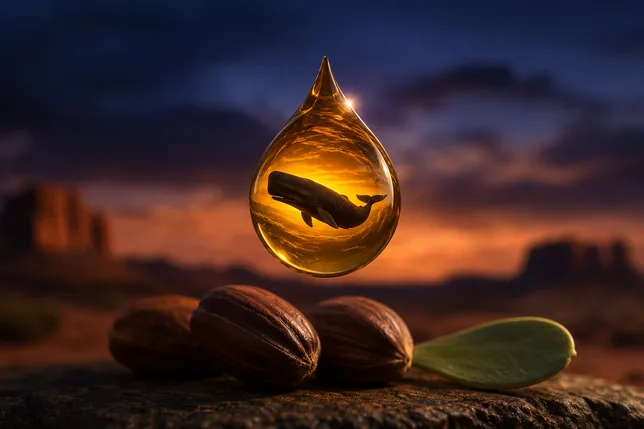
Here is the part of the story nobody expects. For most of the twentieth century, the prized moisture ingredient in cosmetics was spermaceti, a liquid wax from the heads of sperm whales. It was smooth, stable, and skin loving, and it was in everything from cold creams to lipsticks. Then in the early 1970s the United States banned sperm whale products, and an entire industry lost its favorite ingredient more or less overnight.
The replacement had been growing in the desert the whole time. Jojoba's liquid wax turned out to be a near perfect substitute for spermaceti, and interest in the crop exploded in the 1970s precisely because of that ban. It is one of the quietest environmental wins in the history of beauty. A shrub the O'odham had been pressing for centuries replaced a substance that came from hunting whales, and it did the job better. Every bottle of jojoba on a shelf today exists, in part, because the whales got a reprieve.
Why your skin accepts it like its own
Your skin's natural oil, sebum, is not a simple grease. It is a blend that includes wax esters, and jojoba's structure sits remarkably close to them. That similarity is the entire trick, and it plays out in ways you can feel.
- It absorbs instead of sitting. Because the structure reads as familiar, jojoba sinks in fast and finishes soft rather than greasy. Reviewers repeat the same phrase over and over, a little goes a long way, and they mean three or four drops for the whole face.
- Oily skin tolerates it, and often calms down. This sounds backwards, oil for oily skin, but it is the most consistent theme in the acne prone reviews. Skin that fights heavier plant oils accepts jojoba without the breakout tax, and many longtime users report their shine actually evening out.
- It rarely clogs pores. The wax ester structure resists going rancid on your face and does not settle into pores the way heavier triglyceride oils can. No ingredient is zero risk for every face, but jojoba's track record here is about as clean as plant ingredients get.
- The research backs the calm. Peer reviewed work documents genuine anti inflammatory activity and a long record in wound healing and acne studies going back to the 1970s, with clinical testing showing skin suppleness improving within minutes and holding for hours.
The one thing it cannot do
Now the part the brand pages skip, and the reason a Consumer Reports headline once announced that your jojoba oil is not really hydrating your skin. The dermatologists in that piece are right, and it is worth understanding why, because it is the difference between loving this ingredient and returning it.
Jojoba is an occlusive and an emollient. It softens the surface and it seals moisture in. What it does not do is add water, because there is no water in it to give. Skincare people sort ingredients into humectants, which pull water into skin, and occlusives, which stop that water from evaporating. Jojoba is firmly the second kind. Put it on dry, thirsty skin by itself and it will smooth the surface for an hour and change nothing underneath, because it locked in a drought.
The fix is one step. Give it moisture to seal. Apply jojoba to skin that is still damp from washing, or layer it over your regular moisturizer as the last step. Used that way it stops being a disappointment and becomes the thing holding your whole routine in. The reviewers who adore it figured this out on their own, the ones who describe pressing it over damp skin or using it to lock in their products at night. The ones who quit usually made the drought mistake.
Jojoba is a liquid wax ester that mimics your skin's own sebum, which is why it absorbs clean, calms oily skin, and seals moisture in beautifully, as long as you give it moisture to seal.
How to buy it without getting played
Jojoba is a commodity, and that is good news. There is no secret formula to pay up for, which means the difference between a great bottle and a mediocre one comes down to a few checkable things, and none of them are the brand's font.
- Cold pressed and unrefined, golden in color. Refining strips color, scent, and some of the good minor compounds. The golden stuff is the whole plant's work. Clear, colorless jojoba has been processed toward blandness.
- Dark glass or an opaque bottle. Light slowly degrades any plant oil, even one as stable as jojoba. Amber glass is the tell that a brand knows its ingredient.
- One ingredient on the label. One hundred percent jojoba, nothing else. A jojoba blend that lists cheaper oils is a dilution wearing a costume.
- Never pay a luxury markup. A nine dollar bottle and a forty dollar bottle came off the same kind of press. Past the checklist above, extra money buys packaging.
The picks
We pulled the verified reviews on the biggest jojoba oils on Amazon, all of them sitting at the same 4.7 star rating, and read what actual buyers repeat when nobody is marketing at them. Here is where we landed.
Cliganic 100% Pure Organic Jojoba Oil
The people's champion, with a review count most skincare products never see. Buyers describe it absorbing fast with zero smell, minimizing pores, and pulling multi duty on face, hair, and nails, and the pump top earns constant praise for keeping the routine tidy. The catches are practical rather than chemical. A handful of shipping complaints mention leaks, and one long, useful review is a warning to store it away from shower steam, because water getting into any pure oil invites spoilage.
Loved
- Absorbs fast, no scent, no grease
- Face, hair, and nails in one bottle
- USDA organic, cold pressed, golden
Gripes
- Occasional shipping leaks
- Must be stored dry, out of the shower
Leven Rose 100% Pure Organic Jojoba Oil
The reviews here read differently. The most passionate stories on any jojoba listing come from acne prone and sensitive skinned buyers who had tried everything, and several describe it as the first thing that moisturized without triggering a breakout. It ships in proper dark amber glass, which is exactly what the checklist asks for. The recurring gripe is small but real, the dropper is mediocre and drips if you rush it.
Loved
- Adored by acne prone reviewers
- Dark amber glass protects the oil
- Doubles as a gentle makeup remover
Gripes
- The dropper is fussy
- Slight natural nutty scent
NOW Solutions 100% Pure Jojoba Oil
Same golden, cold pressed liquid wax, under five dollars, from a supplement company that has never once spent money on a pretty bottle. Reviewers with oily and combination skin praise it for calming blemishes while it moisturizes, and several note it is completely odorless. There is no dropper and no pump, just a plain bottle of exactly the thing you came for. If you want to try jojoba for the price of a coffee, this is the door in.
Loved
- Unbeatable price per ounce
- Odorless and lightweight
- Same core ingredient as bottles twice the price
Gripes
- Basic packaging, no dropper
- Plastic bottle, so keep it out of the light
What to skip. Anything in a clear plastic bottle sitting in a bright warehouse, and any jojoba blend that lists other oils above jojoba on the label. You are paying for the wax ester. Make sure that is what is in the bottle.
How to use it without wasting it
The mistakes with jojoba are all the same mistake in different outfits, using it like a moisturizer instead of a sealant.
- Apply it to damp skin, or as the final layer over your moisturizer. Never as the only step on dry skin. This is the whole ballgame.
- Three or four drops for the face. Warm them between your palms and press in. Ten drops does not work faster, it just shines.
- Using a retinoid? Jojoba is a favorite buffer. Retinoid first, let it absorb, jojoba after to soften the dryness. It pairs the same way with exfoliating acids, and if you are building a routine around those, start with our guide to how often you should actually exfoliate.
- Store it in a cool, dark, dry place. Not the shower shelf, not a sunny windowsill. Its wax structure makes it one of the most shelf stable plant ingredients there is, but light, heat, and water will eventually beat anything.
- Give it two weeks of consistency before you judge it. The reviewers who saw texture and blemish improvements describe the change arriving quietly, not overnight.
The bottom line
Jojoba earns its place, as long as you hire it for the right job. It is not a hydrator and never was. It is a sebum twin that absorbs clean, calms skin that fights other oils, and seals in whatever moisture you give it, backed by real research and by one of the deepest review records in skincare. The O'odham used it for skin and hair centuries before a chemist confirmed why it worked, and the modern industry only found it because losing whale oil forced everyone to look. Start with the Cliganic if you want the crowd tested default, the Leven Rose if your skin is reactive, or the NOW bottle if you want the experiment to cost five dollars. Put it on damp skin, use three drops, and let the desert's strangest shrub do its quiet work.
This article is general education, not medical advice. Patch test new products and see a dermatologist for persistent or severe skin concerns.
Frequently asked questions
Does jojoba oil clog pores? It is one of the least pore clogging oils you can buy, because it is technically a liquid wax ester that closely resembles your skin's own sebum. Most acne prone reviewers tolerate it well, but every face is different, so patch test first.
Is jojoba oil actually hydrating? Not by itself. Jojoba is an occlusive and emollient, meaning it softens skin and seals moisture in, but it does not add water. Apply it to damp skin or over a hydrating moisturizer and it performs beautifully. Used alone on dry skin, it underdelivers.
Jojoba oil or rosehip oil, which is better? They do different jobs. Jojoba mimics sebum, balances oily skin, and seals in moisture, making it the everyday utility player. Rosehip carries natural retinoids and fades marks and tone over time. Many routines happily use both.
Can I use jojoba oil with retinol or tretinoin? Yes, and it is a popular pairing. Apply your retinoid first, wait for it to absorb, then use a few drops of jojoba to buffer dryness and irritation. It softens the sting without blocking the treatment.
How many drops of jojoba oil should I use on my face? Three or four drops is plenty for the whole face. Warm them between your palms and press into damp skin. More than that just sits on the surface and feels greasy.
Does jojoba oil expire? Slowly. Its wax ester structure makes it far more shelf stable than most plant oils, which is part of its appeal. It still degrades with light, heat, and moisture, so keep it in a dark bottle, out of the sun, and out of the shower.
Sources and further reading
- Jojoba Oil, An Updated Comprehensive Review on Chemistry, Pharmaceutical Uses, and Toxicity, Polymers, PMC, NIH
- Sorry, but Your Jojoba Oil Is Not Really Hydrating Your Skin, Consumer Reports
- Jojoba, Sonoran Native Virtual Tour, University of Arizona Campus Arboretum
- Aggregated verified purchase customer reviews, Amazon