Dehydrated vs. dry skin: how to tell the difference
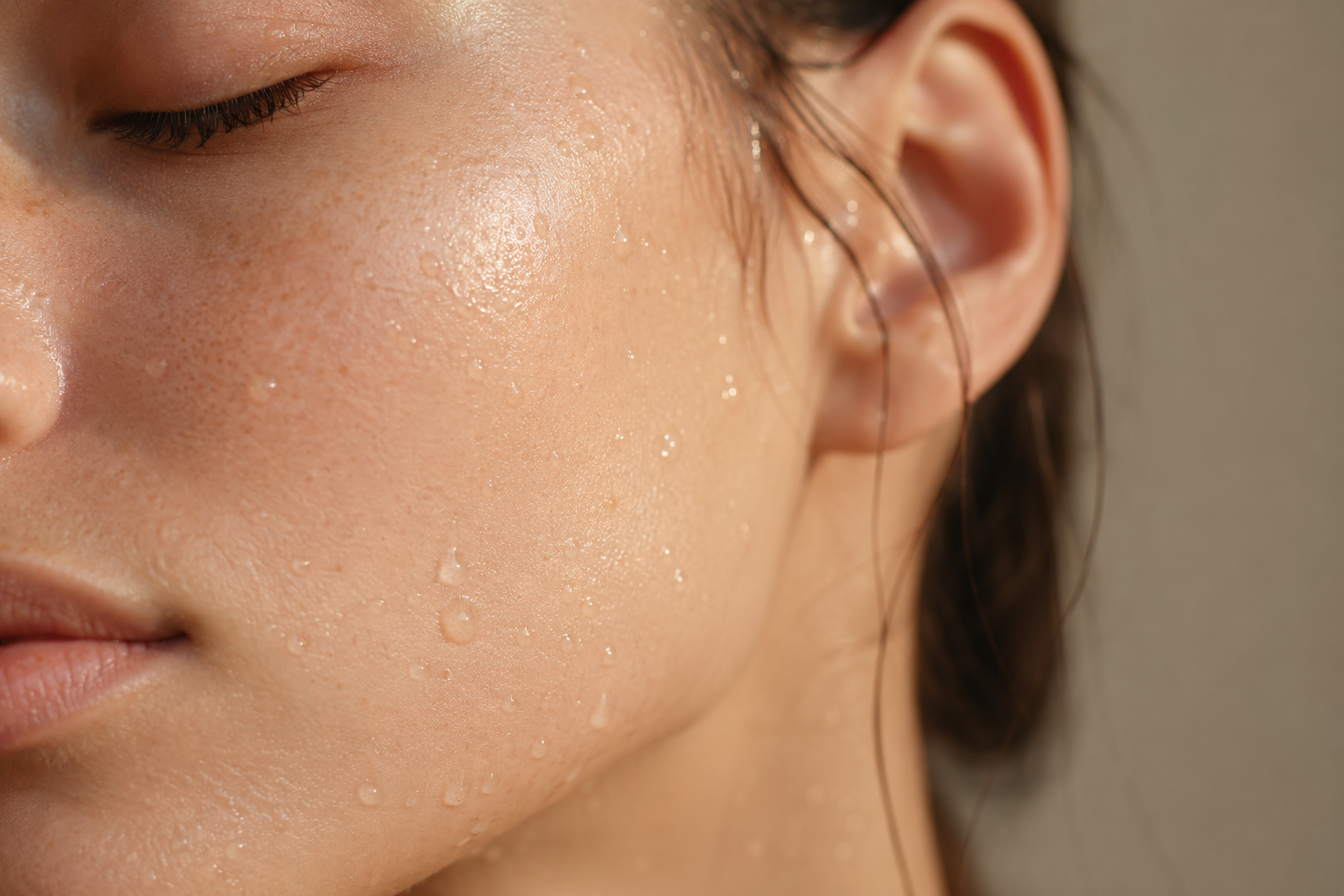
Tight, flaky, dull skin almost always gets blamed on "dryness." But dry and dehydrated are two different problems with two different fixes. Treat the wrong one and nothing improves, no matter how much cream you pile on. Here's how to tell them apart, what's actually happening in your skin, and what genuinely helps.
The core difference
Dry skin is a skin type. It lacks oil, the lipids that keep the surface supple and sealed. It tends to feel dry more or less everywhere, all year, often looks flaky or rough, and usually runs in the family.
Dehydrated skin is a condition. It lacks water. Any skin type can be dehydrated, including oily skin. It looks flat and dull, feels tight right after cleansing, and makes fine lines look more obvious than they really are. It comes and goes with your habits, the weather, and your routine.
Dry skin lacks oil. Dehydrated skin lacks water. You can absolutely have both at once.
What's actually happening in your skin
Your outermost layer, the stratum corneum, works like a brick wall: skin cells (the "bricks") held together by a mortar of barrier lipids, mainly ceramides, cholesterol, and free fatty acids. That mortar does one critical job, it slows the rate at which water evaporates out of your skin, a measure dermatology researchers call transepidermal water loss (TEWL).
When that lipid mortar is thin or damaged, TEWL climbs, water escapes faster than your skin can replace it, and you get the tight, flaky, dull look. Inside the cells, your skin also makes its own humectant system called natural moisturizing factor (NMF), a set of water-binding molecules produced when a protein called filaggrin breaks down. Healthy skin cells can hold several times their weight in water thanks to NMF.
So the two problems map cleanly onto that wall: dry skin is short on the lipid mortar (oil), while dehydrated skin is losing or lacking the water that NMF and a healthy barrier are meant to hold. That's why they need opposite fixes.
A 30-second test
Gently pinch a small area of your cheek and let go. If it creases into fine lines and is slow to bounce back, that points to dehydration (water affects skin's snap and elasticity). A few more quick tells:
- Oily or combination skin that still feels tight? That's dehydration, not dryness.
- Flaky and tight everywhere, year-round, even under a rich cream? That leans toward genuinely dry skin.
- Dullness and "my makeup sits weird" with no real flaking? Usually dehydration.
- Worse in winter, on flights, or after hot showers? Classic dehydration triggers, since low humidity and heat both raise water loss.
What dehydrated skin needs: add water, then trap it
- Humectants like hyaluronic acid, glycerin, and urea, which pull water into the skin. Apply them to slightly damp skin so there's water to grab.
- A moisturizer layered on top to seal that water in. This step isn't optional: in dry air, an unsealed humectant can actually draw water out of deeper skin and let it evaporate. The layer on top is what makes hydration stick.
- Stop the cause: skip hot water, harsh foaming cleansers, and over-exfoliating, all of which strip the barrier and drive water loss.
What dry skin needs: replace the missing oil
- Barrier lipids: look for ceramides, cholesterol, and fatty acids (they work best together), plus emollients like squalane. These rebuild the mortar that holds moisture in.
- Gentle, non-stripping cleansers, cream or balm textures rather than anything that leaves skin squeaky.
- An occlusive at night (a richer balm) to lock everything in while the barrier repairs.

Common mistakes that keep it going
- Layering hydrating toners and serums with nothing to seal them. Water you don't trap just evaporates.
- Over-exfoliating to "fix" flakes. Flaking is often a damaged barrier, and more acid makes it worse.
- Hot water and long showers. Heat strips lipids and spikes water loss.
- Going "oil-free" everything when you're oily but dehydrated. Oily skin can still be starved of water.
When it's both
Plenty of people are dry and dehydrated, and need oil and water. The order that works: hydrate first (humectants on damp skin), then moisturize to seal it (lipids and an occlusive), and protect with sunscreen during the day. Get those three right and most "dry skin" complaints quietly disappear.
How long until it improves
Surface hydration can look better within days once you add water and seal it. Rebuilding a genuinely compromised barrier takes longer, often two to four weeks of consistent, gentle care, because your skin has to manufacture new lipids. If tightness, stinging, or flaking persists despite all this, that's worth a conversation with a dermatologist, since it can signal eczema or another condition rather than simple dryness.
What's behind it: common causes
Dry skin is largely how you're built. It runs in families, becomes more common with age as skin naturally produces fewer lipids, and is worsened by cold, low-humidity weather, long hot showers, and some medical conditions (an underactive thyroid, eczema, and others). You can manage it beautifully, but you're topping up something your skin under-produces.
Dehydration is mostly about what's happening to your skin right now: over-washing or harsh foaming cleansers, too many actives at once, sunburn, dry indoor air from heating and air-conditioning, airplane cabins, and a lot of caffeine or alcohol. Almost all of these are fixable, which is why dehydration usually responds quickly once you change the inputs.
The three jobs of a moisturizer
Most "moisturizers" are really a blend of three ingredient types, and knowing them makes any label readable:
- Humectants pull water in, hyaluronic acid, glycerin, urea, panthenol, honey. These are your fix for dehydration, but they need sealing (as above).
- Emollients soften and smooth, filling the gaps between skin cells, squalane, fatty acids, plant oils, shea. These improve the feel and flexibility of dry skin.
- Occlusives form a sealing layer that slows water escape, petrolatum, dimethicone, beeswax, lanolin. They're the "lid" that makes everything underneath work, especially overnight.
Dehydrated skin leans on humectants plus an occlusive to trap them. Dry skin needs all three, weighted toward emollients and occlusives to replace the oil it lacks.
A simple routine for each
If you're dehydrated: gentle cleanser, a humectant serum on damp skin, a light moisturizer to seal, and sunscreen by day. Skip the squeaky-clean cleanser and ease off actives until the tightness settles.
If you're dry: a creamy or balm cleanser, a moisturizer rich in ceramides and emollients, and an occlusive layer at night. Add a humectant underneath if you're dry and dehydrated.
Does drinking water fix it?
Less than the internet implies. Staying hydrated supports overall skin health, but once you're adequately hydrated, extra glasses don't pump measurable moisture into the stratum corneum, the outer layer that actually looks and feels dry. Topical humectants and a sealed barrier do far more for the surface than chugging water. Drink enough; don't expect it to replace skincare.
When it's not just dry skin
Persistent flaking, redness, itch, or cracking that doesn't budge with good moisturizing may be a skin condition rather than simple dryness. Eczema, psoriasis, and seborrheic or perioral dermatitis all masquerade as "dry skin." If it's painful, spreading, or not improving after a few weeks of gentle care, see a dermatologist rather than layering on more product.
How to layer for maximum hydration
Order matters more than people think. Work thinnest to thickest, and use the damp-skin trick: after cleansing, leave skin slightly damp (or mist it), then apply your humectant serum while there's still water to grab. Follow with your moisturizer within a minute, before the surface dries, so you're sealing the water in rather than chasing it. At night, finish with your richest layer or an occlusive. If you use actives like retinol or acids, apply them on dry skin after the humectant step, and keep them to alternate nights while skin feels tight or flaky.
What to pause while you recover
When skin is dehydrated or barrier-stressed, the fastest progress often comes from removing things, not adding them. For a week or two, pause exfoliating acids and scrubs, strong retinoids, high-fragrance products, and foaming "deep clean" cleansers that leave skin tight. Swap very hot water for lukewarm. Most people are surprised how quickly skin rebounds once it stops being stripped daily, your barrier is constantly trying to repair itself, and the job is mostly to stop interrupting it.
This article is general education, not medical advice. Patch-test new products and see a dermatologist for persistent or severe skin concerns.